Atomic Habits vs Deep Work
Systemic Micro-Habits vs. High-Cognitive Focus: Building an Unstoppable Workflow

Atomic Habits: An Easy & Proven Way to Build Good Habits & Break Bad Ones
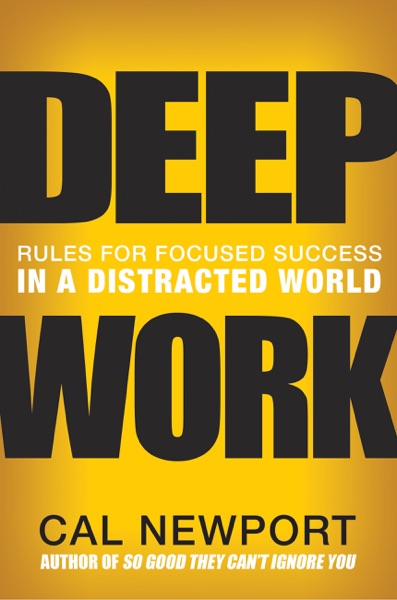
Deep Work: Rules for Focused Success in a Distracted World
The Battle of Ideas
James Clear (Atomic Habits) addresses behavior automation and environmental architecture, whereas Cal Newport (Deep Work) focuses on cognitive capital and uninterrupted high-value concentration. Clear shows you how to automate daily routines without willpower; Newport shows you how to allocate your cognitive energy to produce rare and valuable professional output.
How Their Methodologies Diverge
Atomic Habits tackles automatic, repetitive behavioral routines; Deep Work addresses conscious, high-effort intellectual creation.
Clear optimizes friction and environmental cues; Newport optimizes cognitive isolation, time-blocking, and digital minimalism.
Habits create the baseline discipline; Deep Work creates competitive career moat and rare value.
Comparative Breakdown
| Dimension | Atomic Habits | Deep Work |
|---|---|---|
| Core Focus | Behavioral automation & 1% micro-improvements | Distraction-free high-cognitive creative output |
| Primary Enemy | Friction, bad cues & lack of immediate reward | Shallow work, notification addiction & context switching |
| Key Ritual | Habit stacking & the 2-minute rule | Time-block scheduling & shutdown rituals |
Which One Should You Read First?
Stack both frameworks: Use Atomic Habits to establish morning routines, health, and workspace discipline, then use Deep Work to protect 3–4 hour blocks for your hardest projects.
Read Atomic Habits If:
Anyone struggling with consistency, procrastination, or chaotic daily personal routines.
Open Atomic Habits Masterbrief →Read Deep Work If:
Knowledge workers, software engineers, writers, and executives drowning in meetings and messages.
Open Deep Work Masterbrief →Core Mental Shifts Inside Each Brief
Atomic Habits Key Shifts
8 ShiftsThe Surprising Power of Atomic Habits
Small 1% daily improvements compound into exponential transformations. Breakthroughs require surviving the Plateau of Latent Potential.
Identity-Based Habits: Changing Who You Are
Focus on identity rather than outcomes. Every daily action is an empirical vote casting your future self.
The 1st Law: Make It Obvious
Make the cues of good habits obvious in your physical environment; use Habit Stacking to bind new routines to old ones.
The 2nd Law: Make It Attractive
Make habits attractive through temptation bundling and by immersing yourself in cultures where your goal is normal.
Deep Work Key Shifts
8 ShiftsThe Deep Work Hypothesis
Deep work produces rare, irreplaceable value. Elite performance requires multiplying uninterrupted time by extreme intensity of focus.
The Danger of Attention Residue
Attention residue from task-switching cripples cognition for up to 25 minutes. Never alternate between deep thinking and inbox checking.
Choose Your Deep Work Philosophy
Select a deep work philosophy—Monastic, Bimodal, Rhythmic, or Journalistic—and anchor your routine around it.
The Grand Gesture & Environment Architecture
Use the Grand Gesture and strict environmental architecture to signal your brain that deep work is high-stakes and non-negotiable.
Common Questions Answered
Which should I read first?
Read Atomic Habits first to stabilize your daily routine, then read Deep Work to maximize intellectual productivity.
Ready to master both books in 30 minutes?
Save hours of reading time with interactive mental shifts, practical quizzes, and executive frameworks.