Essentialism vs Four Thousand Weeks
Mastering the Discipline of Less vs. Embracing Mortal Finitude
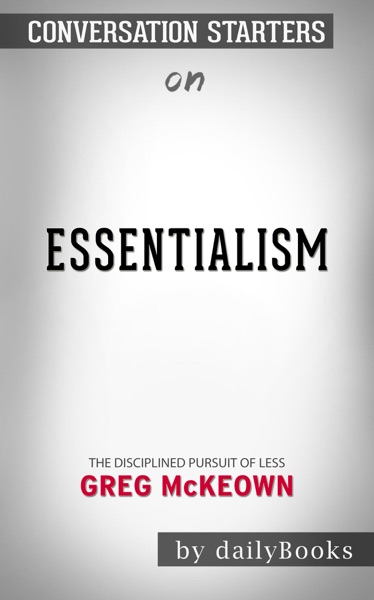
Essentialism: The Disciplined Pursuit of Less
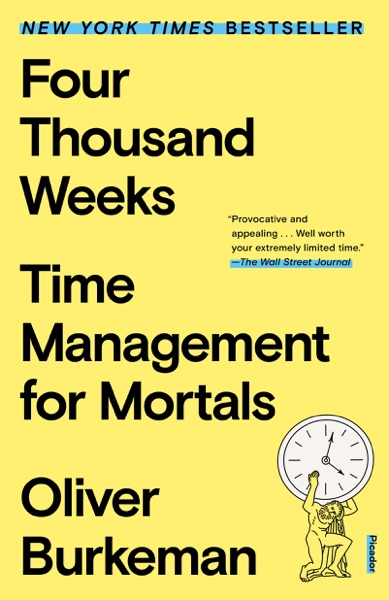
Four Thousand Weeks: Time Management for Mortals
The Battle of Ideas
Greg McKeown’s Essentialism teaches the relentless pursuit of less but better, giving you practical filters to eliminate non-essentials and protect your highest point of contribution. Oliver Burkeman’s Four Thousand Weeks provides a philosophical counter-weight: an exploration of our brief mortal lifespan (~4,000 weeks) that dismantles productivity guilt and encourages accepting our fundamental limitations.
How Their Methodologies Diverge
Essentialism assumes you can systematically choose the right things through disciplined execution; Four Thousand Weeks argues that you will never have enough time to do everything, so you must let some things burn with serenity.
McKeown offers actionable decision matrices (the 90% Rule, trade-off clarity); Burkeman offers existential peace, urging readers to abandon the illusion of infinite mastery.
Essentialism is proactive strategy; Four Thousand Weeks is radical time realism.
Comparative Breakdown
| Dimension | Essentialism | Four Thousand Weeks |
|---|---|---|
| Core Question | How do I focus only on what is essential? | How do I live meaningfully given that my time is strictly limited? |
| Approach to Time | Control, curate, and optimize your schedule | Accept limitation, embrace patience, resist productivity traps |
| Key Tool | The 90% Rule, extreme saying "No" | Limit work-in-progress, decide what to fail at |
Which One Should You Read First?
Read Four Thousand Weeks to eliminate the anxiety of never doing enough, then apply Essentialism to execute on what truly matters.
Read Essentialism If:
Professionals suffering from over-commitment, meeting fatigue, and scattered priorities.
Open Essentialism Masterbrief →Read Four Thousand Weeks If:
High-achievers paralyzed by productivity guilt and perfectionism.
Open Four Thousand Weeks Masterbrief →Core Mental Shifts Inside Each Brief
Essentialism Key Shifts
8 ShiftsThe Core Mindset of the Essentialist
Almost everything is noise; only a tiny fraction of actions produce massive value. Master the deliberate discipline of trade-offs.
The Paradox of Success
The Paradox of Success shows how opportunities dilute focus. Counteract it with continuous, ruthless pruning of non-essentials.
Explore: The 90 Percent Rule
Apply the 90% Rule: if an opportunity is not an absolute 90/100 or higher, treat it as a definitive zero and reject it.
The Courage of the Graceful 'No'
Saying no is an act of courage. Separate the request from the relationship, and trade brief discomfort for lasting respect.
Four Thousand Weeks Key Shifts
8 ShiftsThe Absurd Finitude of Human Existence
Efficiency does not create peace; it merely attracts an endless flood of new demands.
The Efficiency Trap and the Mirage of Calm
You do not have time; you are time. Trying to master it like a possession creates constant anxiety.
Embrace Radical Limitation and Settle Deliberately
Refusing to settle keeps you permanently superficial; choosing a constraint creates real meaning.
The Art of Creative Neglect
Decide in advance what you will fail at. If you don't choose your neglect, exhaustion will choose it for you.
Common Questions Answered
Are Essentialism and Four Thousand Weeks in conflict?
They appear opposing on the surface, but are deeply harmonious. Four Thousand Weeks gives you the emotional permission to let go of low-value demands, while Essentialism gives you the tactical toolset to do so.
Ready to master both books in 30 minutes?
Save hours of reading time with interactive mental shifts, practical quizzes, and executive frameworks.