FOUNDATIONAL THESIS
One hundred thousand years ago, at least six different human species inhabited the Earth. Today, only one remains: Homo sapiens.
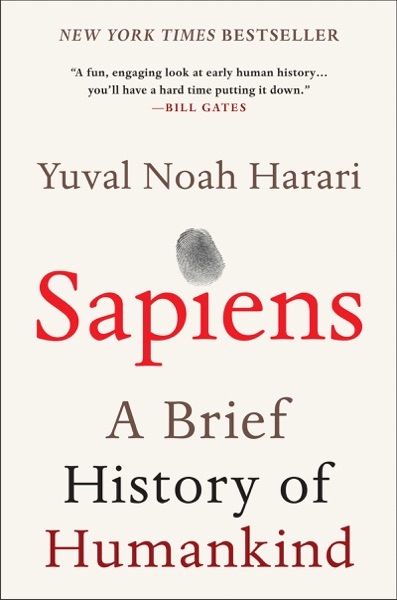
Yuval Noah Harari's Sapiens investigates the biological, psychological, and sociological revolutions that transformed an unremarkable East African primate into the master of the planet.
Here is the breathtaking story of our species and the manufactured myths that govern our daily lives.
An Animal of No Significance
You assume that humans have always dominated the Earth as the undisputed apex predator.
For millions of years, early humans were insignificant animals whose impact on their environment was no greater than that of gorillas, fireflies, or jellyfish.
We occupied the middle of the food chain, hunting small animals, gathering berries, and living in constant fear of large predators.
Our sudden leap from the middle to the top of the food chain occurred so rapidly that the ecosystem—and our own psychology—could not adapt.
This rapid ascent left modern humans filled with ancient anxieties and cruelty.
We are not peaceful kings of the jungle; we are traumatized, anxious primates wielding supreme planetary technology.
The Cognitive Revolution and the Power of Fiction
Seventy thousand years ago, a genetic mutation sparked the Cognitive Revolution in Homo sapiens.
Ants and bees can cooperate in large numbers, but only in rigid ways with close relatives. Chimpanzees can cooperate flexibly, but only with small groups they know intimately. Only Sapiens can cooperate with millions of strangers around shared fictions.
Language did not just evolve for gossip; it evolved to create Imagined Realities.
You can never convince a monkey to give you a banana by promising him limitless bananas in monkey heaven after death.
Shared fictions enable massive, flexible cooperation:
- Nations, borders, and citizenship exist only in shared belief.
- Corporations (like Peugeot or Google) are legal fictions with no physical body.
- Human rights, law, and justice are philosophical constructs, not biological truths.
- When millions believe the same story, they can build pyramids, armies, and global trade.
The secret of human dominance is our unique ability to invent and trust collective fictions.
The Agricultural Revolution: History's Biggest Fraud
You view the Agricultural Revolution as a monumental step forward in human happiness and leisure.
The Agricultural Revolution was history's biggest fraud. It did not offer a better diet or more leisure; it brought harder labor, poorer nutrition, epidemic diseases, and violent social inequality.
Hunter-gatherers worked roughly 20–30 hours a week, ate diverse diets, and enjoyed immense physical freedom.
We did not domesticate wheat; wheat domesticated us.
Humans traded individual health for collective population growth:
- Farming tied humans to fixed plots of land, creating vulnerability to droughts and famine.
- The surplus food was monopolized by ruling elites, creating social castes and warfare.
- The Luxury Trap: luxuries become necessities, spawning new obligations that cannot be undone.
- Sapiens multiplied in numbers while the average individual experienced more daily suffering.
Progress is not linear; technological breakthroughs often create traps that imprison their creators.
Building Castles in the Sky: The Unification of Humankind
As human populations exploded into cities and empires, biological evolution could no longer maintain order.
The imagined order is always in danger of collapsing because it depends on myths, and myths vanish the moment people stop believing in them.
To preserve stability, societies create 'artificial instincts' called culture.
Three universal orders unified the globe: Money, Empires, and Universal Religions.
These three forces bridged all cultural and geographic divides:
- The Economic Order: Money created the most universal system of mutual trust ever invented.
- The Political Order: Empires absorbed diverse peoples into unified legal systems.
- The Religious Order: Universal religions provided cosmic legitimacy to social hierarchies.
Humanity's history is the inexorable story of moving toward global integration.
The Scent of Money: The Greatest Story Ever Told
You think of money as physical gold, paper currency, or digital bank balances.
Money is the most universal and most efficient system of mutual trust ever created. It is the only trust system that can bridge almost any cultural, religious, or political divide.
Christians and Muslims who slaughter each other in war both gladly accept the exact same gold coin or dollar bill.
Money is not material reality; it is a psychological construct based on collective trust.
Why money conquered the world:
- It converts almost anything into anything else (universal convertibility).
- It allows anyone to cooperate on any project without needing shared morals or religion.
- Money is founded on double trust: I believe in the dollar because I know you believe in the dollar.
- When trust in the underlying fiction collapses, money instantly becomes worthless paper.
Money is the ultimate triumph of the human imagination.
The Scientific Revolution: The Discovery of Ignorance
Ancient traditions and religions believed that all essential wisdom had already been revealed by gods or sages.
The Scientific Revolution began with the greatest discovery of all: the discovery of ignorance. Modern science admits that it does not know everything.
When humans acknowledged their ignorance, they began observing empirical reality and acquiring new technological powers.
The union of Science, Capitalism, and Imperialism created the modern global superpower engine.
Science unlocked exponential feedback loops:
- Scientific discoveries created technological mastery and weaponry.
- Capitalists funded expeditions in return for lucrative future profits.
- Empires provided legal stability, global trade routes, and naval protection.
- Credit allowed people to finance the future based on the belief in endless economic growth.
Admitting ignorance gave humanity the power to reshape the physical universe.
The Capitalist Creed & The Gospel of Endless Growth
Before the modern era, the global economy was stagnant because people believed wealth was a zero-sum game.
Modern capitalism is built on trust in the future. Credit is the economic translation of the belief that tomorrow will be wealthier and more productive than today.
In the pre-modern world, you could not start a business without existing gold. Today, banks create money out of thin air based on future promise.
Capitalism treats profits not as luxuries to be hoarded, but as fuel to be reinvested into expanding production.
The foundational tenets of the capitalist religion:
- Reinvestment of profits into research and development drives continuous innovation.
- Economic growth has become the supreme moral good of all modern political systems.
- The ecological dilemma: can an economic model requiring infinite growth survive on a finite planet?
- Trust in future growth is the glue holding global sovereign debt together.
Capitalism is the most successful, transformative religion in human history.
And They Lived Happily Ever After? The Future of Sapiens
Humans possess godlike powers: we split the atom, edit genetic code, and explore the solar system.
We are more powerful than ever before, but we have very little idea what to do with all that power. Worse still, humans seem to be as irresponsible as ever. Self-made gods with no idea what they want.
Historical data shows that despite conquering famines and plagues, modern humans are not significantly happier than stone-age hunter-gatherers.
Happiness does not depend on objective conditions of wealth or health; it depends on the alignment between reality and expectations.
The ultimate existential questions for our species:
- As expectations rise faster than technology, chronic dissatisfaction persists.
- Biotechnology and AI threaten to replace natural selection with intelligent design.
- Sapiens may soon be superseded by engineered cyborgs or inorganic super-intelligences.
- The most important question facing humanity is not 'What do we want to become?', but 'What do we want to want?'
Power without purpose is the definitive tragedy of the modern human condition.
The Grand Illusion: Why 'Sapiens' Will Rewire Your Brain, But Not Your Daily Routine
Millions of readers dive into 'Sapiens' expecting to unlock the secrets of human history. They want to understand why we are the way we are. But does knowing the grand sweep of history actually change how you deal with your boss, or help you save for retirement?
You grab 'Sapiens' with high hopes. You've heard the buzz. Millions of readers have called it life-changing. You expect to unlock the secrets of human existence, maybe even find some wisdom for your own daily grind.
Then you start reading. It's huge. The ideas are massive, spanning millennia. It’s not a quick read, and it definitely isn't a self-help book. You might feel a bit lost in the sheer scale, wondering how any of this applies to your busy schedule or your personal goals.
But then, a lightbulb moment. Harari talks about 'imagined realities.' Money, nations, laws – they're all stories we agree to believe. This hits hard. You start seeing the invisible threads that hold society together, and how fragile they can be. It's like getting X-ray vision for the modern world.
Another big idea lands: progress isn't always good. The Agricultural Revolution, for example, made life harder for many. This makes you question everything you thought you knew about 'getting ahead' or what truly counts as improvement. It's a powerful challenge to common wisdom.
You finish the book feeling profoundly changed. Your perspective on humanity is wider, deeper. But you also realize it doesn't offer easy answers for your personal life. It's a grand tour, not a personal trainer. Yet, the journey itself is unforgettable.
The Honest Verdict
Read 'Sapiens' if you crave a mind-expanding journey through history and want to fundamentally rethink what it means to be human, even if it offers few direct action steps.
Skip 'Sapiens' if you're looking for practical life advice, a detailed historical account of a specific era, or a purely optimistic view of humanity's future.
Apply The 20% That Actually Works
Don't get bogged down in hundreds of pages. Master the full executive framework in 15 minutes, or open the 1-page action worksheet directly.
-
For a different, equally grand explanation of human history focusing on geography and environmental factors.
-
If you want a more optimistic, data-driven look at human progress and how to avoid common biases.
-
For a direct challenge to some of Sapiens' core assumptions about early human societies and the origins of inequality.
Executive Synthesis & Monday Morning Action
Homo sapiens conquered the Earth through the unique superpower of shared fictional myths—nations, money, corporations, and religions.
As we transition into an era of biotechnology and artificial intelligence, our greatest challenge is learning how to wield our godlike powers with wisdom, meaning, and ethical clarity.


