FOUNDATIONAL THESIS
We often view exceptional organizational culture as a mysterious byproduct of hiring geniuses or getting lucky with chemistry.
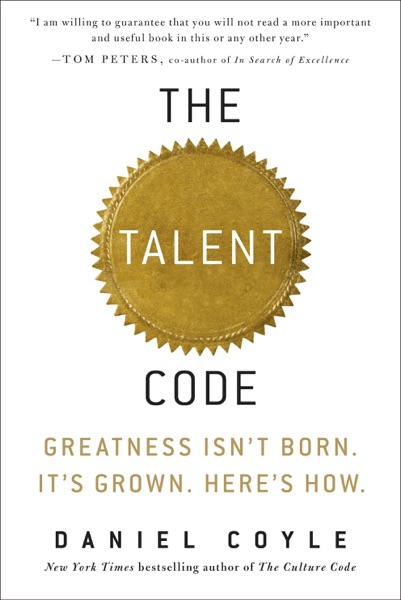
Daniel Coyle shatters this illusion through exhaustive research into the world's most successful groups, from Pixar to Navy SEAL Team Six. Culture is not a set of static values painted on an office wall; it is a continuous, living stream of micro-behaviors that signal belonging and safety.
Understanding these mechanisms transforms how you lead teams forever.
By mastering the three critical skills of building safety, sharing vulnerability, and establishing purpose, you can systematically engineer a high-performing culture from scratch.
The Anatomy of Belonging
Before a team can solve complex problems, it must first establish an environment of absolute psychological safety.
The human brain is constantly scanning for subtle signs of danger or exclusion in social interactions. Safety is built through an endless series of small, reliable signals called belonging cues.
Safety is not about being nice; it is about signaling to the primitive brain that you are entirely safe and connected.
These cues include close physical proximity, eye contact, energetic listening, and minor physical touches that communicate inclusion.
When leaders consistently broadcast these micro-signals, the group's collective nervous system relaxes.
This physiological shift unlocks high-bandwidth communication and radical collaboration.
- Maintain open body language and active eye contact during every interaction.
- Eliminate sarcasm and interruptions to protect psychological safety.
- Acknowledge every contribution, no matter how small, to reinforce inclusion.
The Power of Vulnerability
Conventional wisdom suggests that trust must precede vulnerability. Coyle reveals the exact opposite: vulnerability is the engine that actually generates trust.
When one person admits a mistake or asks for help, it triggers a powerful psychological contract.
Vulnerability doesn't come after trust—it leads to it.
This dynamic creates what Coyle calls a vulnerability loop, where two individuals exchange signals of weakness and support, rapidly accelerating connection.
Leaders must model this first by being the first to admit error.
When a leader says 'I screwed up,' it gives everyone else permission to do the same.
- Open meetings by explicitly sharing a recent mistake or operational blind spot.
- Ask team members for help on challenges outside your immediate expertise.
- Respond to admissions of failure with gratitude rather than criticism.
Establishing Shared Purpose
Having safety and vulnerability is useless if the team is racing in the wrong direction.
High-purpose environments do not rely on inspiring posters or complex corporate manifestos.
Instead, they relentlessly tie daily tasks to a larger, unforgettable mission.
High-purpose environments do not tell stories; they build narrative frameworks that connect the mundane to the meaningful.
Successful leaders act as cultural architects who curate simple, memorable heuristics.
They constantly repeat these anchor phrases so that every team member knows precisely why their work matters in the grand scheme. Purpose is successfully communicated when the team can effortlessly link their immediate actions to ultimate outcomes.
- Distill your team's core mission into a single, highly memorable sentence.
- Connect every weekly metric and project directly back to that core mission.
- Celebrate operational wins that embody the group's highest values.
Designing for Cooperation
Bringing brilliant people together often results in internal friction and ego clashes rather than innovation.
True cooperation requires designing environments where individual ambitions are naturally subordinated to group success.
Coyle shows how elite groups use physical spaces and rituals to force collaboration.
Cooperation is a design problem, not a character problem.
By carefully structuring how teams interact, share information, and review past projects, leaders can eliminate silos. When the architecture of collaboration is frictionless, collective intelligence vastly outperforms individual brilliance.
- Create cross-functional working sessions to break down organizational silos.
- Design physical or digital workspaces that encourage spontaneous collisions.
- Implement transparent feedback loops for every major project milestone.
The Art of Feedback
Feedback is the lifeblood of high performance, yet most organizations fail miserably at delivering it.
When feedback is poorly delivered, it triggers defensiveness and shuts down learning.
Elite cultures treat feedback not as an evaluation, but as a vital coaching conversation.
The most effective feedback is delivered in safe, low-stakes environments where growth is the shared objective.
Successful leaders separate performance reviews from developmental coaching.
They normalize struggle and frame mistakes as necessary data points on the path to mastery. When safety and candor coexist, feedback becomes the ultimate accelerator of skill acquisition.
- Deliver real-time, micro-feedback immediately following an event.
- Ask guiding questions rather than issuing top-down edicts during debriefs.
- Explicitly reaffirm your belief in the person's potential before offering critique.
Leading Through Crisis
A culture's true strength is revealed only when disaster strikes. Fragile teams fracture under pressure, pointing fingers and retreating into self-preservation.
Resilient cultures lean into the chaos with radical clarity and calm determination.
Crisis does not build character; it simply reveals the cultural infrastructure you built beforehand.
Leaders during turbulent times must over-communicate intent while decentralizing execution.
They create environments where every individual feels empowered to take decisive action. True leadership in a crisis is about maintaining calm focus and protecting the team's shared safety.
- Communicate with extreme transparency during periods of high uncertainty.
- Push decision-making authority down to the front lines where the action is.
- Conduct immediate, blameless post-mortems after every major operational hurdle.
Cultivating Habit Loops
Culture is maintained not by grand announcements, but by the relentless repetition of small, positive habits.
When behaviors become automatic, the culture sustains itself even in the absence of leadership.
Coyle emphasizes the power of deliberate, daily rituals.
You do not rise to the level of your goals; you fall to the level of your cultural habits.
High-performing groups institutionalize behaviors through predictable cadences like daily stand-ups, weekly retrospectives, and specific greeting rituals.
These recurring events reinforce the group's core identity on a continuous basis. Consistency in small rituals compounds over time into an invincible competitive advantage.
- Establish a recurring daily or weekly ritual that reinforces team values.
- Audit your current meetings and eliminate any that fail to add cultural or operational value.
- Reward behaviors that actively embody the desired cultural norms.
The Architect's Blueprint
Building an elite culture is not a quick fix; it is a lifelong commitment to intentional leadership.
You must consciously design every interaction to build belonging, share vulnerability, and reinforce purpose.
The journey requires patience, self-awareness, and relentless consistency.
Leadership is not about being in charge; it is about taking care of the people in your charge.
By treating culture as a dynamic skill set rather than a vague philosophy, you unlock the ultimate potential of your team. The most successful leaders are those who build environments where ordinary people achieve extraordinary things together.
- Review your leadership practices weekly against the three pillars of culture.
- Eliminate toxic behaviors that quietly erode psychological safety.
- Commit to being the most vulnerable and purposeful person in your organization.
The Culture Code's Paradox: Why It Works for Elite Teams but Stumbles for Yours
Millions of working professionals pick up 'The Culture Code' hoping to unlock the secrets of amazing teams. They dream of a workplace where everyone feels safe, connected, and driven. But then Monday morning hits, and the same old problems creep back in. Is the 'code' really that simple to crack?
You pick up 'The Culture Code' with high hopes. You've seen dysfunctional teams, and you dream of a workplace where everyone clicks. Coyle's stories of amazing groups, from sports teams to movie studios, paint a picture of what's possible. You think, 'Finally, the secret formula!'
But then you try to apply it. You're not leading a Navy SEAL unit. You're just a busy manager, or a parent, or someone trying to get a project done. The grand visions and inspiring speeches feel a million miles away from your daily grind. It's easy to feel like the 'code' is for someone else, not for you.
Then, something shifts. You start paying attention to the small things. A quick nod, a genuine 'how are you?' at the start of a meeting. You realize Coyle's 'belonging cues' aren't about big gestures, but tiny, consistent signals that tell people, 'You are safe here. You matter.'
And then comes the scary part: vulnerability. You admit a mistake you made, or ask for help on something you don't know. It feels awkward at first. But then, someone else does it. A 'vulnerability loop' starts, and suddenly, trust begins to grow in ways you never expected.
It's not a magic spell. It's a daily practice. The book doesn't give you a cheat sheet, but it shows you the simple, powerful actions that, over time, truly build a culture where people thrive.
The Honest Verdict
Read 'The Culture Code' if you're a leader, manager, or team member genuinely committed to understanding the subtle behaviors that build strong, cohesive groups.
Skip 'The Culture Code' if you're looking for a quick fix, a simple checklist, or aren't prepared to put in the consistent effort to change your own behaviors.
Apply The 20% That Actually Works
Don't get bogged down in hundreds of pages. Master the full executive framework in 15 minutes, or open the 1-page action worksheet directly.
-
For a practical guide on how small, consistent behaviors (like Coyle's cues) lead to massive results over time.
-
If you want to dive deeper into the power of vulnerability, courage, and empathy in leadership, which are key to Coyle's 'vulnerability loops'.
-
To understand how a clear, inspiring purpose (Coyle's third pillar) can unite and motivate any group.
Executive Synthesis & Monday Morning Action
Daniel Coyle's groundbreaking research proves that great culture is not a genetic accident or a lucky combination of brilliant personalities.
It is a precise operating system built upon three universal pillars: safety, vulnerability, and purpose. When you systematically design micro-behaviors that foster belonging, invite mutual risk, and clarify your mission, high performance becomes the inevitable outcome.
Stop waiting for culture to magically happen around you.
As an intentional leader, you possess the tools to engineer an unstoppable team from the ground up by focusing entirely on daily actions, radical candor, and shared meaning.